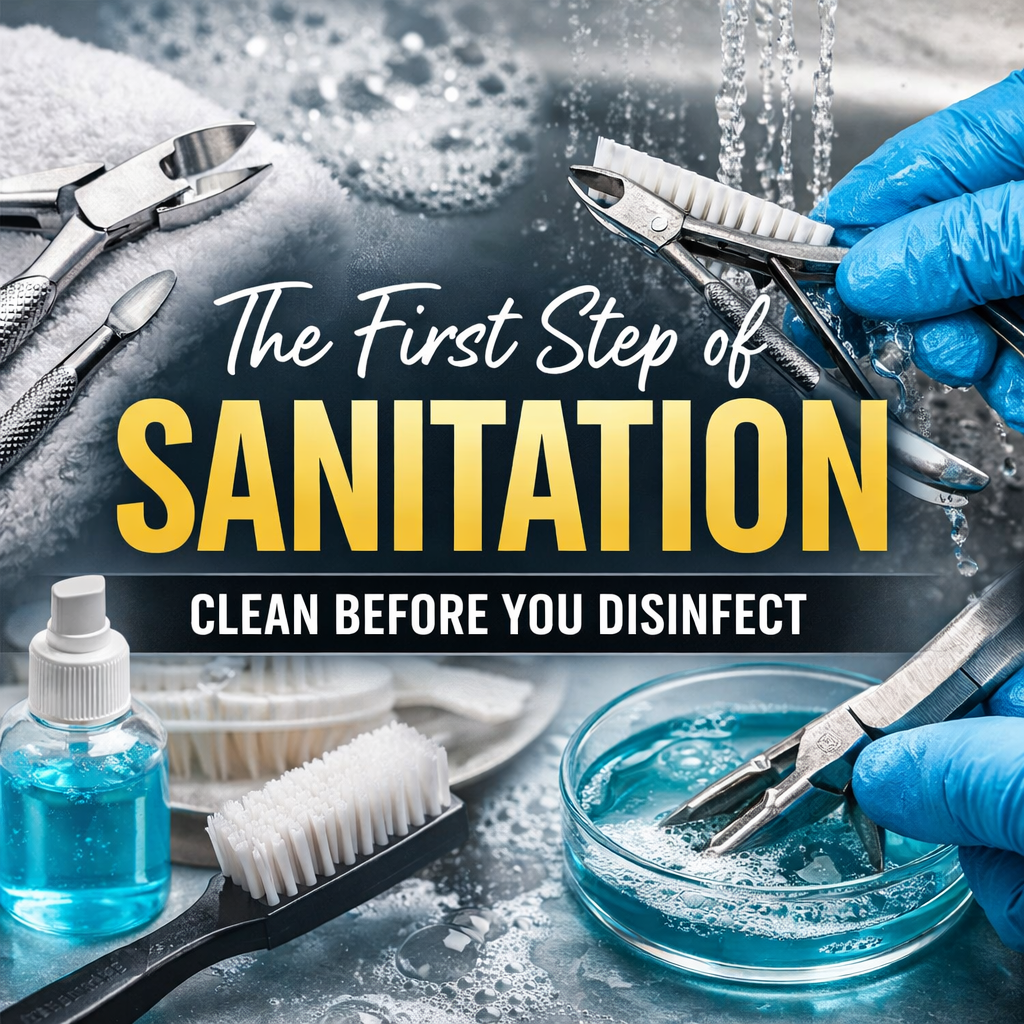
As stated in my previous blog, In the beauty salon world, sanitation is not optional, and it is not something to rush through just to get to the “real service.” It is the foundation of every service we provide. Before the polish, before the exfoliation, before the massage, before any beautiful result can happen, sanitation must come first. The very first step of sanitation is cleaning. That means removing all visible debris, dust, skin, product residue, and organic matter from tools, implements, and surfaces before disinfection can even begin. Yet this is the very step too many technicians are skipping, shortening, or doing carelessly.
Let’s be very clear: if an item is not properly cleaned first, it cannot be properly disinfected. HEAR ME!!! Disinfectant is not magic. It does not cut through layers of debris and make a dirty implement safe. If tools still have visible matter on them, the disinfectant cannot do the job it was designed to do. That means the technician may believe they are working safely when in reality they are putting clients, coworkers, and their own professional reputation at risk. In a salon environment, that is unacceptable. We are entrusted with the health and safety of every person who sits in our chair, and that trust should never be taken lightly.
I understand, we as technicians are in too much of a hurry. The pressure to move quickly, fit in one more appointment, or avoid the inconvenience of proper sanitation has led to bad habits becoming common practice. Tools get wiped instead of cleaned thoroughly. Contact times are ignored. Bowls, basins, foot files, and work surfaces are not given the attention they require. Some technicians have convinced themselves that “good enough” is acceptable because they have been doing it that way for years. It is not acceptable. “Good enough” sanitation is poor sanitation, and poor sanitation has consequences.
When cleaning is rushed or skipped, the entire service standard drops. This is how contamination spreads. This is how infections happen. This is how the public begins to lose trust in our industry. Every technician who cuts corners contributes to a larger problem that affects all beauty professionals, including those who work hard to uphold proper standards. Clients may not always see the behind-the-scenes details, but they do notice when a salon feels careless, unprofessional, or unsafe. Cleanliness is not just about compliance. It is about credibility.
Cleaning takes time because it is supposed to take time. It is part of the service, part of the responsibility, and part of what separates a trained professional from someone simply going through the motions. If technicians want to be respected as professionals, then they must behave like professionals, and that starts with giving sanitation the time and care it deserves.
In today’s salon world, there is no excuse for not knowing better. Education is available. Regulations are clear. The science behind proper cleaning and disinfection is not new. What is missing in many cases is not information, but discipline. Technicians must be willing to slow down, follow the correct steps, and stop making excuses for rushed practices. The first step of sanitation matters because every step that follows depends on it. When cleaning is done correctly, disinfection has a chance to work. When cleaning is neglected, safety is already compromised.
Quite honestly, technicians who are not willing to put in the time to clean properly need to re-evaluate the standard of care they are providing. Sanitation is not extra. It is not optional. It is not something to do only when convenient. It is the beginning of safe practice, and it should be treated with the seriousness it deserves every single time.
Cleaning is the physical removal of all visible dirt, dust, skin, nail debris, product residue, oils, and other organic matter from tools, implements, and surfaces before disinfection takes place. It is done by washing or scrubbing with soap or detergent and water, or using an ultrasonic cleaner, following the manufacturer’s directions, so nothing is left behind that can block a disinfectant from working properly. In simple terms, if a tool, implement, or surface is not first made visibly clean, it is not truly ready to be disinfected, which means the sanitation process is incomplete.
Are you taking 20 seconds with warm sudsy water to clean your implements?
Look for our upcoming blog on the benefits of using an ultrasonic cleaner