
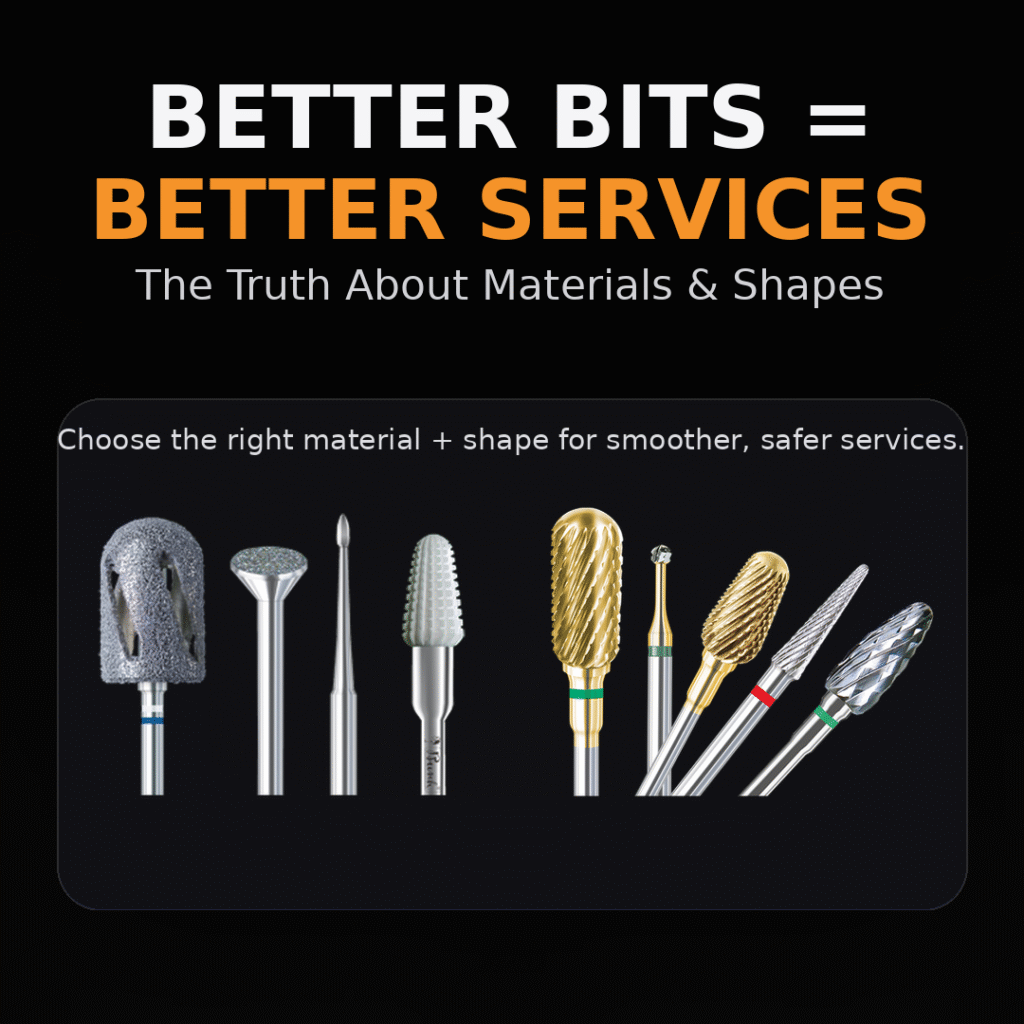
The Truth About Materials and Shapes
If you’ve ever said, “I have a whole case of bits… and I still don’t feel like I have the right one,” you’re not alone.
Or, have you ever been confused about what bit to use for what service?
Most techs don’t need more bits. They need more knowledge for choosing the right bit, based on material + shape + purpose. Because when your bit choice is right, everything gets easier: cleaner work, faster services, less heat, less pressure, and more consistent results.
Let’s break down what actually matters (and what doesn’t), so you can stop guessing and start working smarter.
Material + Shape = Performance
- Material determines how the bit works (cutting, smoothing, control, heat).
- Shape determines where it works best (cuticle zone, surface, sidewalls, callus, etc.).
You can’t “make” the wrong material work by changing your speed. And you can’t “force” the wrong shape into the right job without risking damage, heat, or wasted time.
Choosing Bit Material – 3 choices!
1) Diamond: Control + Precision (Your detail work hero)
Diamond bits don’t “slice” like a blade, they abrade. That’s why they feel controlled and predictable.
Best used for:
- Cuticle and proximal nail fold detailing
- Sidewall cleanup
- Refining around tight contours
- Gentle work on thicker skin (depending on protocol and grit)
Why techs love them:
- Great control
- Less “grabby”
- Ideal for finesse work
What to watch:
- If you press too hard to “speed things up,” you’ll generate heat and irritation.
- Diamonds work best with light touch and correct RPM…not force.
2) Carbide: Fast Removal (When you need efficiency)
Carbide bits have flutes/blades that cut product away quickly.
Best used for:
- Debulking gel, hard gel, acrylic
- Smoothing after bulk removal
- Reducing thickness in enhancements (with skill and control)
Why techs love them:
- Quick removal
- Saves time
- Excellent for high-volume services
What to watch:
- Carbide is powerful. Using the wrong grit/shape or too much pressure can damage the natural nail fast.
- Carbide can create heat if you hover or press.
3) Ceramic: Product Removal with a “Cooler Feel”
Ceramic bits remove product efficiently (like carbide) but many techs find they feel cooler and smoother in motion.
Best used for:
- Gel/hard gel removal
- Clients sensitive to heat
- Techs who prefer a smoother glide
What to watch:
- Ceramic isn’t automatically “safer.” It still removes quickly.
- Your safety still comes from technique: motion, pressure, RPM, and not staying in one spot.
4) Polishers/Finishers: Refinement Only
These are for the last step. Refining and finishing, not bulk removal.
Best used for:
- Final smoothing
- Surface refinement
- Controlled finishing (depending on your service and sanitation requirements)
What to watch:
- Some finishing bits are porous or harder to fully disinfect. Always choose tools that fit your sanitation standards and replace when worn.
Choosing Bit Shape
Here’s the simplest way to think about shape:
- Tight areas need slim shapes.
- Broad areas need wide shapes.
- Curves need rounded shapes.
For Cuticle + Sidewalls (precision zone)
These shapes help you work around contours without overworking the nail plate:
- Flame: cuticle pocket + sidewalls (precision work)
- Cone/Taper: sidewalls and tighter spaces
- Football/Oval: smoothing and refining around the cuticle zone (more forgiving)
Pro tip: If you’re “chasing cuticle” with a big barrel, you’ll overwork the nail and still miss the details. Use shapes made for the job.
For Product Removal (broad surface zone)
These shapes help you remove efficiently without digging:
- Barrel/Cylinder: fast removal on flat surfaces
- Safety barrel: same benefit, less risky near skin
- Tapered barrel: nice blend of access + coverage
Pro tip: Heat usually comes from staying in one spot or pressing. A better shape lets you remove with a lighter hand.
For Callus Work (skin zone)
Callus work is its own category. The goals are different: controlled reduction, smooth finish, client comfort, and safe sanitation.
Commonly used shapes include:
- Discs (used correctly for even reduction)
- Specialty callus shapes (brand-specific designs)
- Larger surface refiners for finishing
Pro tip: Callus reduction should be a progression. If you jump straight to aggressive work, you create sensitivity and unpredictable results.
The Real Secret: Grit + Pressure + Motion
Even the best bit fails when the technique is wrong.
Here are the three rules I have personally learned in my few short years of getting myself familiar with e-filing and bits;
1) If you need pressure, you chose the wrong grit.
The bit should do the work…not your hand.
2) Heat comes from hovering.
Keep moving. Consistent motion prevents hot spots.
3) Your RPM should match the task.
- Detail work often needs more control, not “more speed.”
- Removal work needs efficient movement, not heavy pressure.
If you’re uncertain: lower pressure first, improve your movement second, and adjust RPM third.
A Quick “Choose Your Bit” Cheat Sheet
Ask yourself these two questions every time:
1) What am I working on?
- Skin/detail → Diamond
- Product → Carbide or Ceramic
- Finish/refine → Polisher/finisher
2) Where am I working?
- Tight areas (sidewalls, cuticle pocket) → Flame / Taper
- Broad surface (product removal) → Barrel / Cylinder
- Curves/contours → Football / Oval
- Large callus zones → Disc / specialty callus shapes
That’s it. Two questions. Better choices.
Better Bits = Better Results
When your bit selection is dialed in:
- Services feel smoother and faster
- Results become consistent
- Clients feel safer and more comfortable
- You reduce fatigue and overwork
- Your confidence goes up…and so does retention
Because better work isn’t about working harder. It’s about working smarter with the right tools.
Because I am always asked…Quick recommendations by foot scenario
A) Routine dry skin / light callus
-
Material: Diamond
-
Grit: Fine (180–240) (or medium then fine if needed)
B) Moderate callus (most common)
-
Material: Medium diamond
-
Grit: 120–150 to reduce → 180–240 to finish
C) Thick heel callus
-
Material: Coarse to extra coarse diamond
-
Grit: 80–100 only if truly thick → then 120–150 → finish 180–240
D) Fissures / cracked heels
-
Goal is not “grind it out.” It’s controlled reduction + smoothing.
-
Material: Diamond for refining + finishing
-
Grit: 120–150 light blending (if needed) → 180–240 finish
(Then pair with a serious home-care plan.)
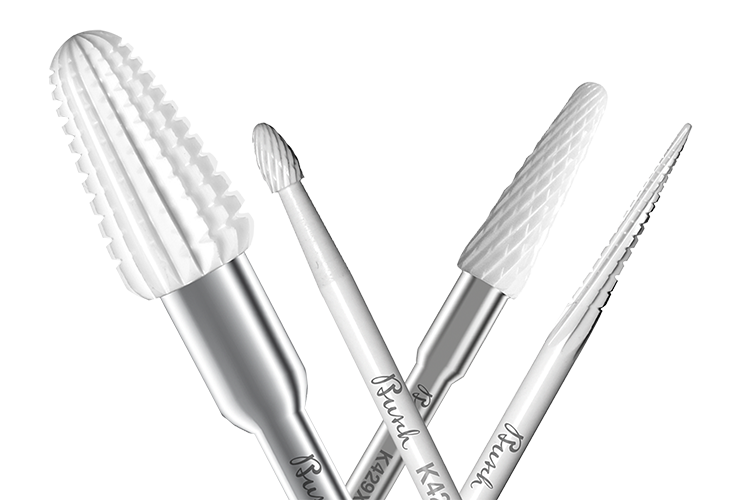
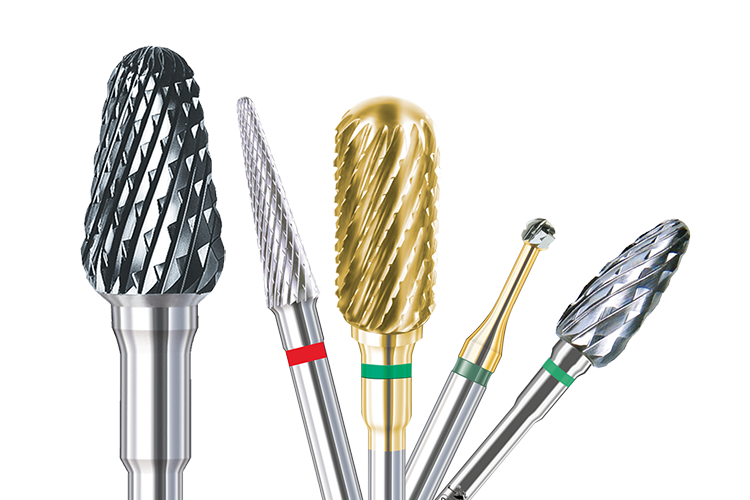
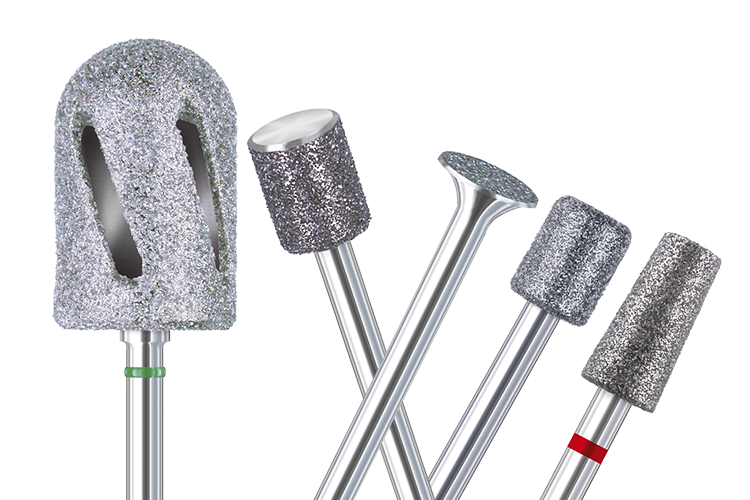
When we’re working on foot skin, the goal isn’t to “remove the problem.” It’s to reduce thickness, lift away loose flakes, and smooth and refine the surface so the skin feels comfortable and looks clean, without over-thinning.
Here’s the honest truth: bit choice is personal. One tech loves diamonds, another swears by carbide, and someone else prefers ceramic. As your e-file skills grow, you’ll find you can get great results with different materials and shapes, because at that point, your control, pressure, and movement matter as much as the bit itself.
Centre for Beauty offers bits by Busch. If you want the most predictable results behind the drill, Busch is a smart choice because the bits are built for consistency. Consistent grit, consistent balance, and a consistent “feel” from one bit to the next. That matters in real life: smoother cutting, less bounce, less heat, and less need to press, which protects both the client’s skin/nail and your hands. Add in strong durability and professional-quality manufacturing, and you’re not just buying a bit…you’re buying reliability that shows up in faster services, cleaner finish work, and more confidence every time you pick up your e-file.
I am not an expert on bits. In fact, in my 24 years of owning a Salon we never used an e-file. However, I’ve done a ton of research and learned from our Manufacturer. Maybe this research will help you!
What I will say is there Is a difference in the quality of bits. You may find them cheaper on Amazon or other low cost options yet, you will know it. They will have to be replaced more frequently because they wear down much faster. Quality matters. Our Busch bits are medical grade quality, made to work for you!


This was a great, thorough article!
Thanks Deb. So much info to share. Just trying to answer all the questions which come across my desk regarding bits. Sure appreciate you.